
This decision affects more than your closing date. It shapes your monthly budget, how soon you can move in, and what you'll spend on repairs and utilities for years afterward.
The gap between the two options shows up in the numbers. New single-family houses sold nationally carried a median price of $424,900 in May 2026, while existing single-family homes hit $446,400 in June 2026. Timelines diverge too: existing-home contracts typically close in about 30 days, while new construction in the South Atlantic region averages roughly 7.8 months from permit to completion.
Key Takeaways
- New construction cuts repair risk with modern layouts and builder warranties
- Existing homes offer faster move-in and mature, established neighborhoods
- Your priorities decide the winner: customization versus speed and proven infrastructure
- Military families near Kings Bay Naval Base often prefer turnkey new-build communities
New Construction vs Existing Home: Quick Comparison
Before digging into details, here's how the two options stack up across the factors that matter most to buyers.
| Factor | New Construction | Existing Home |
|---|---|---|
| Cost | National median around $424,900 (May 2026) | National median around $446,400 (June 2026) |
| Move-in timeline | Several months to build, depending on stage at purchase | Typically 30-60 days to closing |
| Customization | Choose floor plans, finishes, and lot placement | Limited to post-purchase renovations |
| Maintenance & warranty | Builder warranties often cover structural components, systems, and appliances for several years | No builder warranty; buyer assumes repairs from day one |
| Location & community | Newer planned communities with pools, playgrounds, or gated access | Established neighborhoods near mature schools and shopping |
A quick note on that price gap: these are national median figures from sources like the National Association of Realtors and the U.S. Census Bureau, covering different months and very different transaction mixes. They're useful benchmarks, not proof that an identical house costs more one way or the other in Kingsland or Brunswick specifically.
The biggest practical difference for most buyers comes down to warranty coverage. New construction homes typically include builder warranties covering structural components and major systems for a set period, which removes a layer of financial risk that resale buyers simply don't have.
What Is a New Construction Home?
A new construction home is a property that has never been lived in, sold directly by a builder or developer rather than a previous homeowner. For buyers who want modern design and fewer near-term repair headaches, this matters a lot.
Core benefits typically include:
- Systems and materials built to current building codes and standards
- Fewer unexpected repair costs during the first several years of ownership
- Energy-efficient construction that can lower monthly utility bills
- Builder warranties that shift repair risk away from the buyer
New construction isn't one-size-fits-all. Buyers generally encounter three variations:
- Move-in-ready spec homes: already built or nearly finished, ready for quick closing
- To-be-built homes: buyer selects a lot and floor plan before construction starts
- Fully custom builds: buyer works with the builder on a personalized design

Whichever path a buyer chooses, efficiency is where new construction pays off financially. Homes built to ENERGY STAR standards are required to be at least 10% more energy efficient than minimum-code new construction, with average improvements closer to 20%. That efficiency shows up in appraisals, too: EPA-cited research found rated energy-efficient homes carrying sale premiums of 2% to 8% in many markets.
Use Cases of New Construction
New construction tends to fit specific buyer profiles well:
- Growing families who want more square footage and open-concept layouts
- First-time buyers who prefer predictable costs over renovation projects
- Relocating military families who need a turnkey home without repair surprises
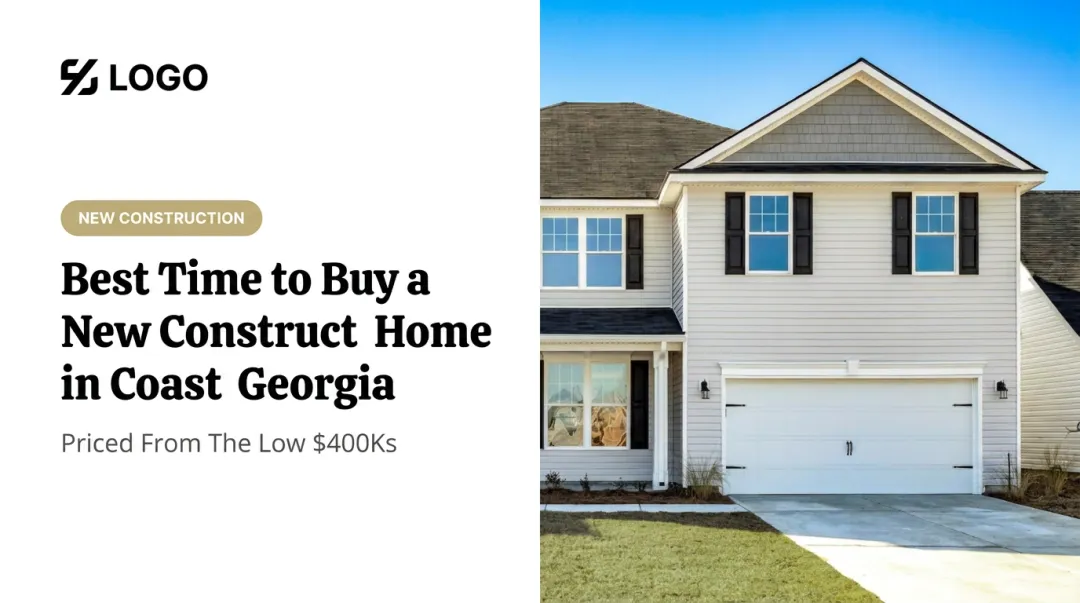
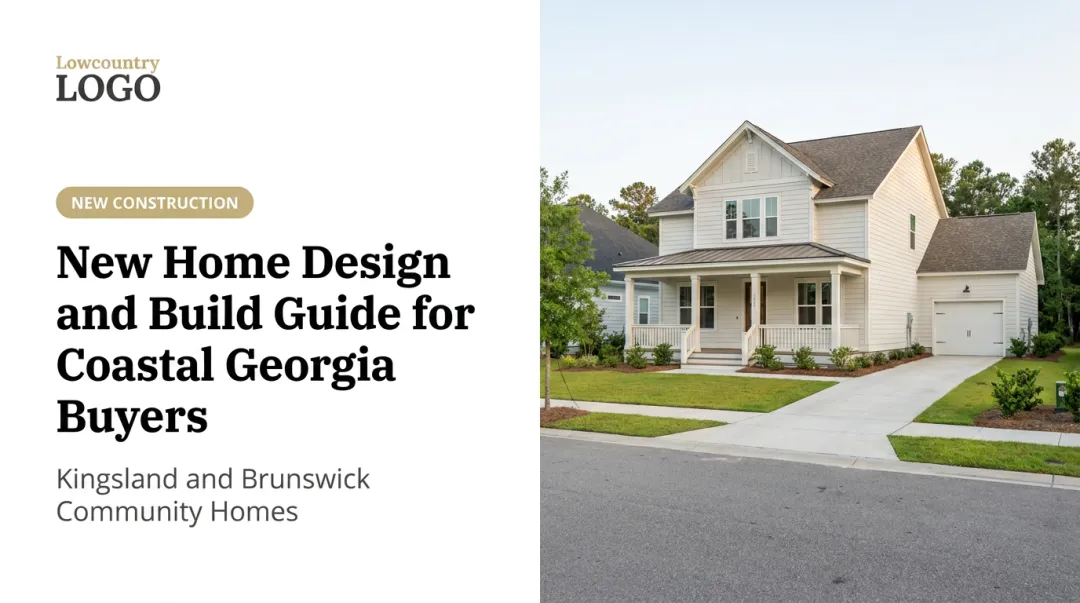
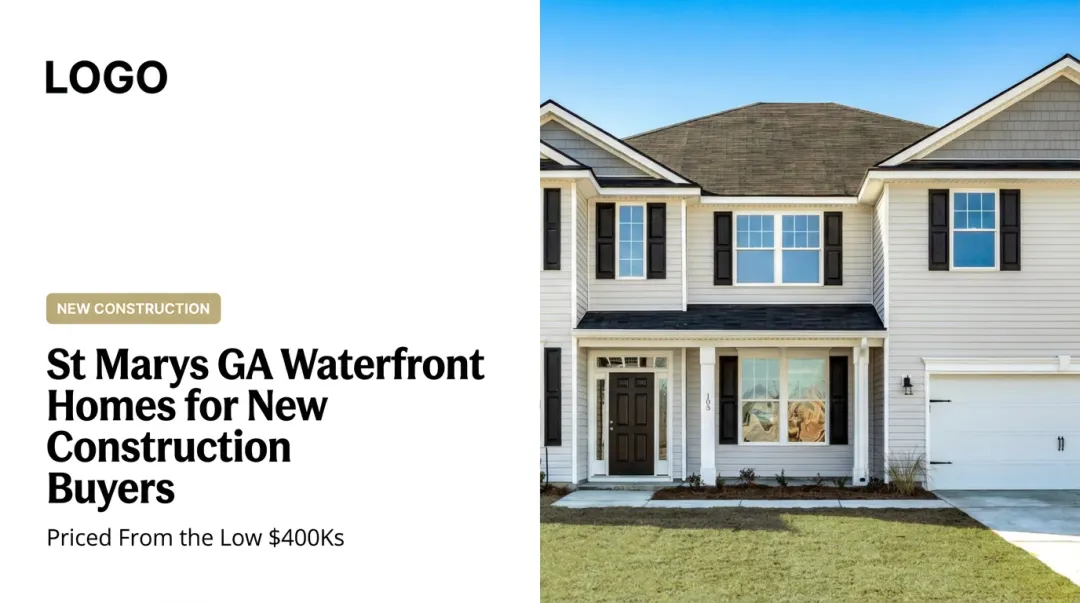
Coastal Georgia communities built by Smith Family Homes illustrate this well. Settlers Hammock and NorthShore in Kingsland, along with Covington Pointe in Brunswick, offer open floor plans, pools, playgrounds, and gated or riverfront settings depending on the community, features that resale inventory in the same price range rarely matches. Floor plans like the 4,161-square-foot Gwinnett Plan, starting at $421,900, show the scale and pricing buyers can expect in these communities.
What Is an Existing Home?
An existing home is any property that's been previously owned or occupied. For buyers prioritizing established neighborhoods, mature landscaping, or lower upfront costs, resale is often the practical answer.
Core benefits typically include:
- Lower average price per square foot in many markets
- Immediate occupancy, often within 30-60 days of an accepted offer
- Mature trees, established lawns, and settled landscaping
- More room to negotiate price, especially in slower markets
Those upfront savings come with a tradeoff: age. Existing homes vary quite a bit in condition, and a resale home built within the last 10 years may need little more than cosmetic updates. A home built in 1960 is a different story entirely, often carrying original systems that are decades past their intended lifespan.
That age gap matters financially. Census data from the 2021 American Housing Survey shows owners of homes built before 1950 spent a median $1,800 annually on upkeep. Recent buyers of these older homes paid far more, a median $3,900 a year, compared with $1,500 for long-term owners who'd already handled major repairs.
Use Cases of Existing Homes
Resale homes make the most sense for buyers who:
- Need to relocate quickly for a job start date
- Want a specific historic district or established downtown location
- Have a tighter down payment budget and need lower upfront costs
The catch is inspection risk. NAR's inspection-cost data (citing HomeAdvisor estimates) puts foundation repair at $2,175 to $7,823, whole-house rewiring around $16,000, and HVAC replacement between $5,000 and $12,000. None of these show up until a buyer is already under contract.

New Construction vs Existing Home: Which Is Better?
The right choice comes down to four factors: budget flexibility, move-in timeline, tolerance for repair surprises, and how much customization you want.
Choose new construction if you:
- Prioritize energy efficiency and lower long-term utility costs
- Want minimal maintenance surprises during your first years of ownership
- Prefer modern, open-concept floor plans over dated layouts
- Are drawn to planned communities with built-in amenities
Choose an existing home if you:
- Need to move within 30-60 days
- Want a specific established neighborhood, school zone, or historic district
- Have a limited down payment and need lower upfront costs
- Don't mind handling repairs and updates as they come up
A relocating executive with a hard start date needs resale speed. A family planning to stay put for 15 years values the warranty protection and lower utility bills that new construction offers instead.
Real-World Example: Choosing New Construction in Coastal Georgia
Consider a common scenario near Kings Bay Naval Base: a military family with orders to relocate, house-hunting on a tight timeline. Like many buyers in this position, they start by touring resale listings in Kingsland, since existing inventory is often ready sooner.
The concerns pile up fast during those tours. Older HVAC systems nearing end of life. Original windows driving up cooling costs in Georgia's humid summers. No warranty protection if something fails six months after closing — just an inspection report flagging issues nobody wants to negotiate over again.
That's when new construction communities like NorthShore and Settlers Hammock enter the picture. Both sit in Kingsland, within the same general drive to Kings Bay Naval Base. Both offer the Gwinnett Plan, a 4,161-square-foot, five-bedroom layout with granite countertops and LVP flooring throughout the first-floor common areas. Stainless steel appliances come standard, not as upgrades.
What tends to tip the decision:
- Skips the inherited repair list since everything is new and under warranty
- Delivers predictable, code-compliant systems instead of guessing at an aging HVAC's remaining life
- Includes community amenities like NorthShore's gated St. Marys River setting or Settlers Hammock's pool and playgrounds across from Camden County High School
- Adds optional upgrades, like a second-floor media room, at the time of purchase instead of as a future renovation project

For buyers who want coastal lifestyle access instead, Covington Pointe in Brunswick offers a sidewalk-connected layout near top-ranked elementary and middle schools, minutes from St. Simons Island and Jekyll Island.
If predictable costs and modern amenities matter more than an immediate move-in date, new construction offers a real alternative to resale in these Kingsland and Brunswick communities.
Ready to compare communities for yourself? Contact Smith Family Homes listing agent Dannielle Grassa at 912-793-1997 or dgrassa@smithfamilyhomes.com to tour available homes and learn about the 3% buyer's agent commission offered on qualifying purchases.
Frequently Asked Questions
What decreases property value the most?
Deferred maintenance, outdated systems, and adverse site or location conditions typically hurt value the most. Appraisers also weigh nearby land use that conflicts with the neighborhood's character.
Is it cheaper to buy new construction or an existing home?
It depends on the market. New construction often carries a higher upfront price but lower maintenance and utility costs over time. Resale homes may cost less upfront, though repairs down the road can add up.
How long does it take to buy a new construction home compared to an existing home?
Existing-home closings usually take 30-60 days once under contract. New construction can take several months to build, depending on whether you're buying a spec home or a to-be-built plan.
Do new construction homes appreciate faster than existing homes?
There's no universal rate proving new homes appreciate faster nationally. Appreciation depends on location, comparable sales, and documented features like energy certifications, not newness alone.
Can you negotiate the price of a new construction home?
Builders rarely cut base prices, though it happens: recent NAHB data shows roughly a third of builders reduced prices in 2025. More often, buyers negotiate upgrade credits, closing cost assistance, or financing incentives instead.
What should I look for when comparing a new construction community to an existing neighborhood?
For new construction, check builder reputation, warranty coverage, and HOA fees. For existing neighborhoods, weigh proximity to established schools, shopping, and infrastructure already in place.